What gold flotation is and where it fits
Gold flotation is a method that separates gold and gold-bearing sulphide minerals from waste rock using differences in surface chemistry. Flotation of gold ores works best when the gold is associated with sulphide minerals. You add reagents to a slurry, attach the valuable minerals to air bubbles, and skim them off as a froth concentrate. The concentrate then goes to smelting or, increasingly, to a downstream leaching circuit. Gold flotation matters most for sulphide ores, especially those with fine-grained gold locked in pyrite or arsenopyrite, where gravity alone won't release enough metal.
According to the USGS Mineral Commodity Summaries 2025, worldwide gold mine production was an estimated 3,300 tons in 2024. World Gold Council data shows China contributed around 10 per cent of global gold production in 2025. A gold flotation plant is often the first step in turning that ore into a saleable concentrate.
How a gold flotation plant is arranged
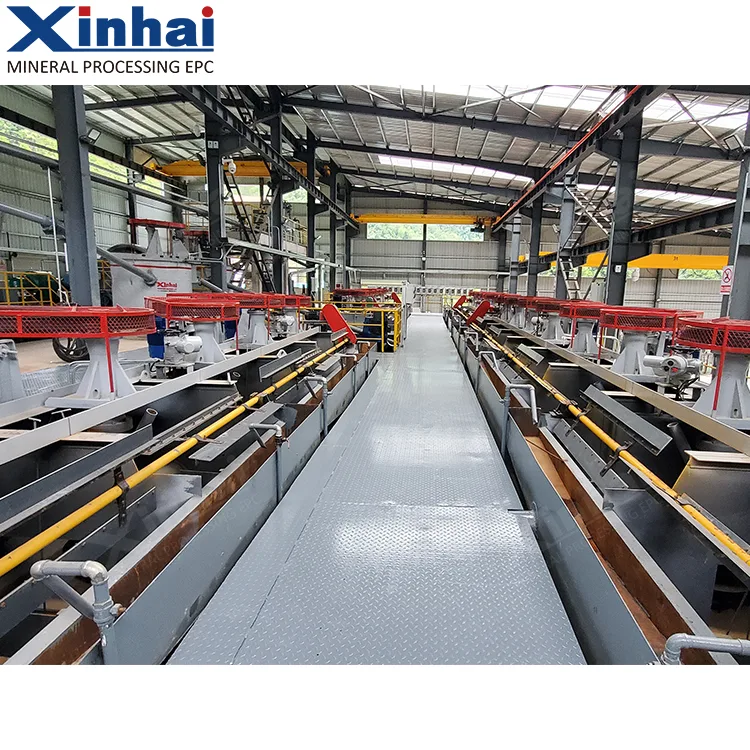
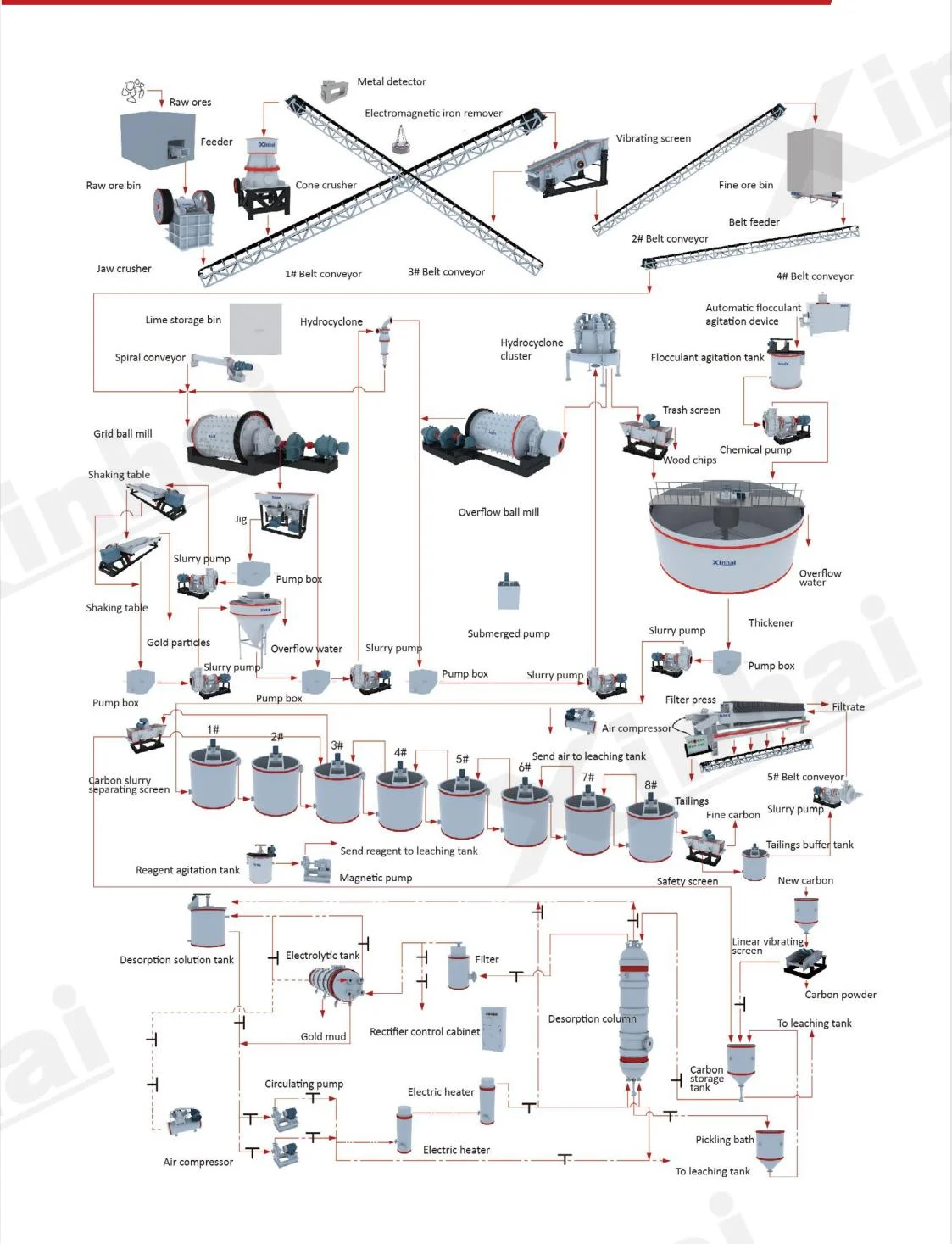
A complete flotation plant works as a staged circuit: rougher, scavenger, then cleaner. The rougher cells pull as much gold-bearing sulphide as possible. Scavenger cells recover the last floatable material from the rougher tailings. Cleaner cells re-float the rougher concentrate to raise its grade. This arrangement maximises recovery while keeping concentrate quality high enough for the next step. Xinhai supplies flotation cells up to 320 m³ per unit, which reduces the number of cells and the plant footprint.
Reagent dosing and conditioning sit upstream of the flotation cells. Collectors make gold-bearing sulphide surfaces hydrophobic. Frothers stabilise the bubble froth. Modifiers adjust pH and depress unwanted minerals. You also need froth handling and concentrate dewatering after the cells. The exact dosage depends on ore mineralogy, pulp density, water chemistry, and temperature. Pilot testing is how Xinhai confirms the flowsheet before you commit to a full plant. For an introduction to the broader processing plant, see the gold processing plant page.
Testwork and the variables that decide the flowsheet
No two gold ores float the same way. Flotation testwork has three levers: flowsheet arrangement, operating conditions, and the reagent scheme. A sequential test programme tells you whether the ore needs fine grinding, which collector works, and whether a regrind stage will lift cleaner grade. Xinhai's CNAS-accredited laboratory runs about 200 beneficiation tests a year and around 5,000 element analyses per month. It also performs Bond work index tests, which feed directly into grinding equipment sizing.
The standard sequence Xinhai follows is:
- Step 1 — mineralogical identification.
- Step 2 — chemical analysis.
- Step 3 — density determination.
- Step 4 — particle size analysis.
- Step 5 — Bond work index testing.
- Step 6 — preliminary flowsheet exploration.
- Step 7 — condition optimisation for grinding fineness, modifiers, collectors and frothers.
- Step 8 — open-circuit flotation tests.
- Step 9 — closed-circuit tests.
- Step 10 — product analysis and settling tests.
- Step 11 — mass balance and flowsheet confirmation.
Grinding fineness is the first big variable. If gold is locked inside sulphide grains, you can't float what you haven't liberated. Pulp density and pH come next. pH controls surface charge and the action of depressants. Reagent type and dosage are then tuned against the ore. Water quality and slurry temperature also shift flotation kinetics. You can read more about ore testing in the how to test gold ore guide.
Flotation equipment and what drives selection
Xinhai manufactures a range of flotation machines, from self-aerating cells to forced-air tanks and columns. The main families are SF, BF, XCF/KYF, CLF and flotation columns. SF cells are self-aerating and suit small to mid-sized plants. BF cells are an improved self-aerating design. XCF cells work with KYF cells; the XCF can act as a lift pump, so the row doesn't need a separate feed pump. CLF cells are built for coarse particle flotation. Columns deliver efficient fine-particle flotation.
| Equipment | Type | Typical role |
|---|---|---|
| SF flotation cell | Self-aerating | Small to mid-sized plants |
| BF flotation cell | Self-aerating | Improved self-aeration |
| XCF/KYF flotation cell | Forced-air | XCF can lift pulp to KYF |
| CLF coarse particle cell | Forced-air | Coarse gold-bearing sulphides |
| Flotation column | Forced-air | Fine particle cleaning |
Selection isn't about picking the biggest cell. You weigh ore floatability, particle size, pulp density, cell volume, aeration rate, agitation intensity, number of flotation stages, froth depth control, specific energy and wear parts. A high-throughput plant may use 320 m³ cells to cut footprint. A smaller operation may do better with a bank of smaller SF cells. The XCF/KYF pairing is particularly useful when you need horizontal slurry transport without extra pumps. Wear parts, including rubber stators, rotors and polyurethane impellers, are consumables that affect availability, so they belong in the selection decision. Reagent conditioning uses agitated tanks chosen by volume, residence time, pulp density, viscosity, impeller type and power density. See gold milling plant for the grinding and classification equipment upstream of flotation.
Combined routes: flotation before leaching or gravity
For complex ores, flotation concentrate can go straight to a carbon-in-leach circuit. This skips a separate regrind in some cases and puts the gold into solution. You might choose flotation followed by concentrate leaching when the gold is locked in sulphides that cyanide can't reach directly. The flotation step concentrates the sulphides, then leaching treats a much smaller tonnage. On suitable ores, CIL and CIP recovery can reach 99%, according to Xinhai's published figures. That number is ore-specific, never a promise.
Gravity concentration before flotation is another option. A gravity stage can pull coarse free gold out of the circuit early, before it gets slimed or lost to tailings. The flotation plant then handles the remaining sulphide gold. Pilot testing is how you confirm which route makes sense, because a flowsheet that works on one ore body won't necessarily work on the next.
Cyanide handling deserves honest caution. If you combine flotation with a leaching circuit, you're taking on a toxic reagent. The International Cyanide Management Code is a voluntary industry programme covering the production, transport, storage and use of cyanide. Signatory operations are certified through third-party audits. You should plan compliance and safety procedures before the plant is designed, not after. For a closer look at leaching options, see gold CIL plant and gold leaching.
Engineering and project delivery
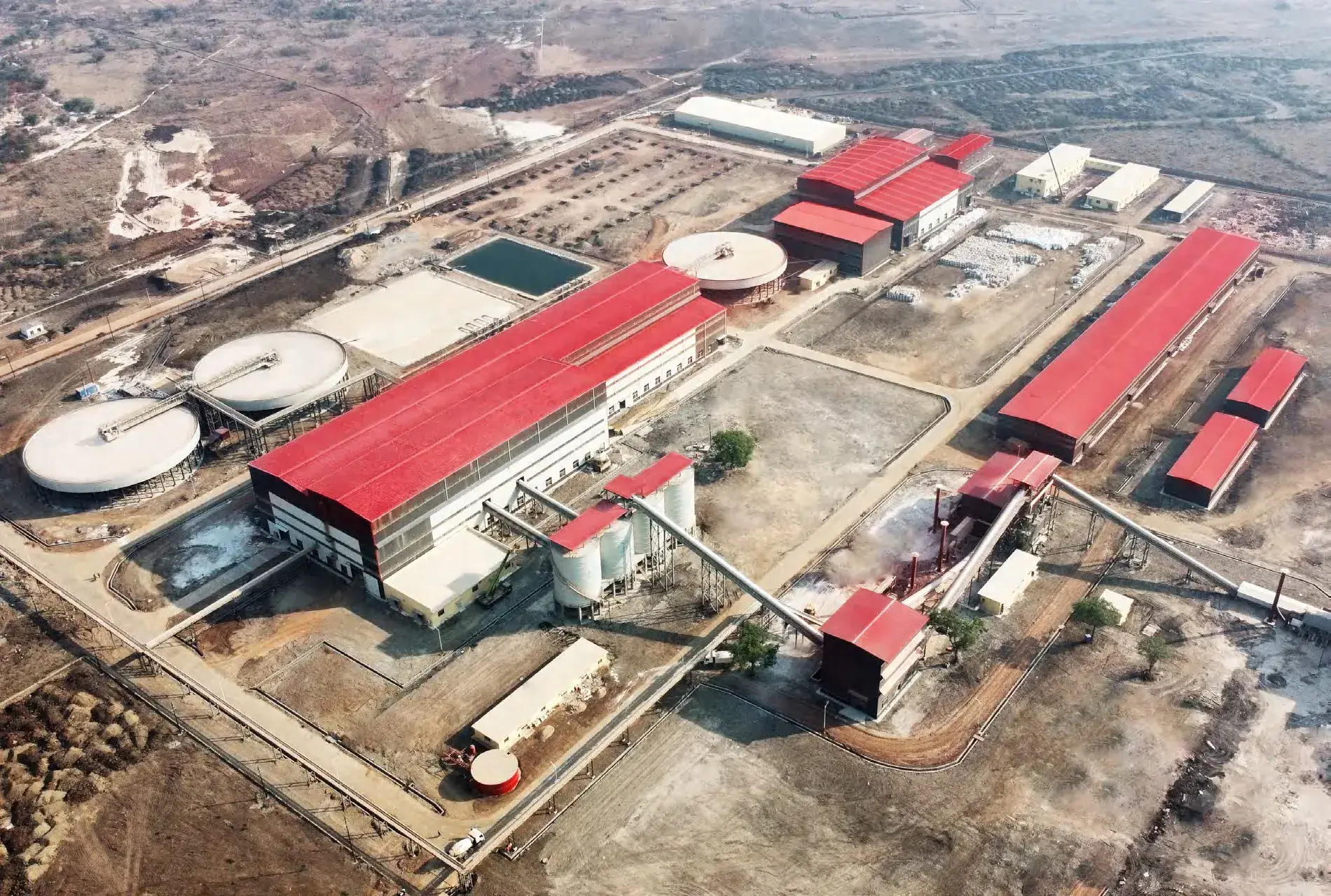
Xinhai reports that it has served more than 2,500 mines, completed over 600 mine EPC+M+O projects, and worked in more than 100 countries across 70-plus ore types. The group's published figures also include 700-plus technical experts, three intelligent manufacturing bases covering roughly 110,000 m², and more than 1,000 equipment types. The equipment range includes ball mills up to 7 m in diameter, flotation cells up to 320 m³, leach tanks 20 m by 20 m, and thickeners up to 100 m. Those numbers describe the organisation, not the performance of any single plant.
The design institute holds a Class B metallurgical qualification in China. That is a Chinese credential, not a representation of qualification in any other jurisdiction. For projects where reporting standards matter, Xinhai can design to JORC or NI 43-101 compliant frameworks. The JORC Code sets minimum standards for public reporting in Australasia, while NI 43-101 is the Canadian standard for mineral project disclosure. Xinhai's laboratory is CNAS-accredited against ISO/IEC 17025; CNAS accredits testing laboratories in China.
Relevant gold plant references include a 15,000 t/d gold processing EPC project in Guinea, gold mining and processing contracting and operation in Ghana, and a 4,000 t/d gold carbon-in-pulp plant in Kyrgyzstan. You can read more about the Ghana gold plant and the Kyrgyzstan gold plant on their regional pages. For an overview of all solutions, start at the solutions page.