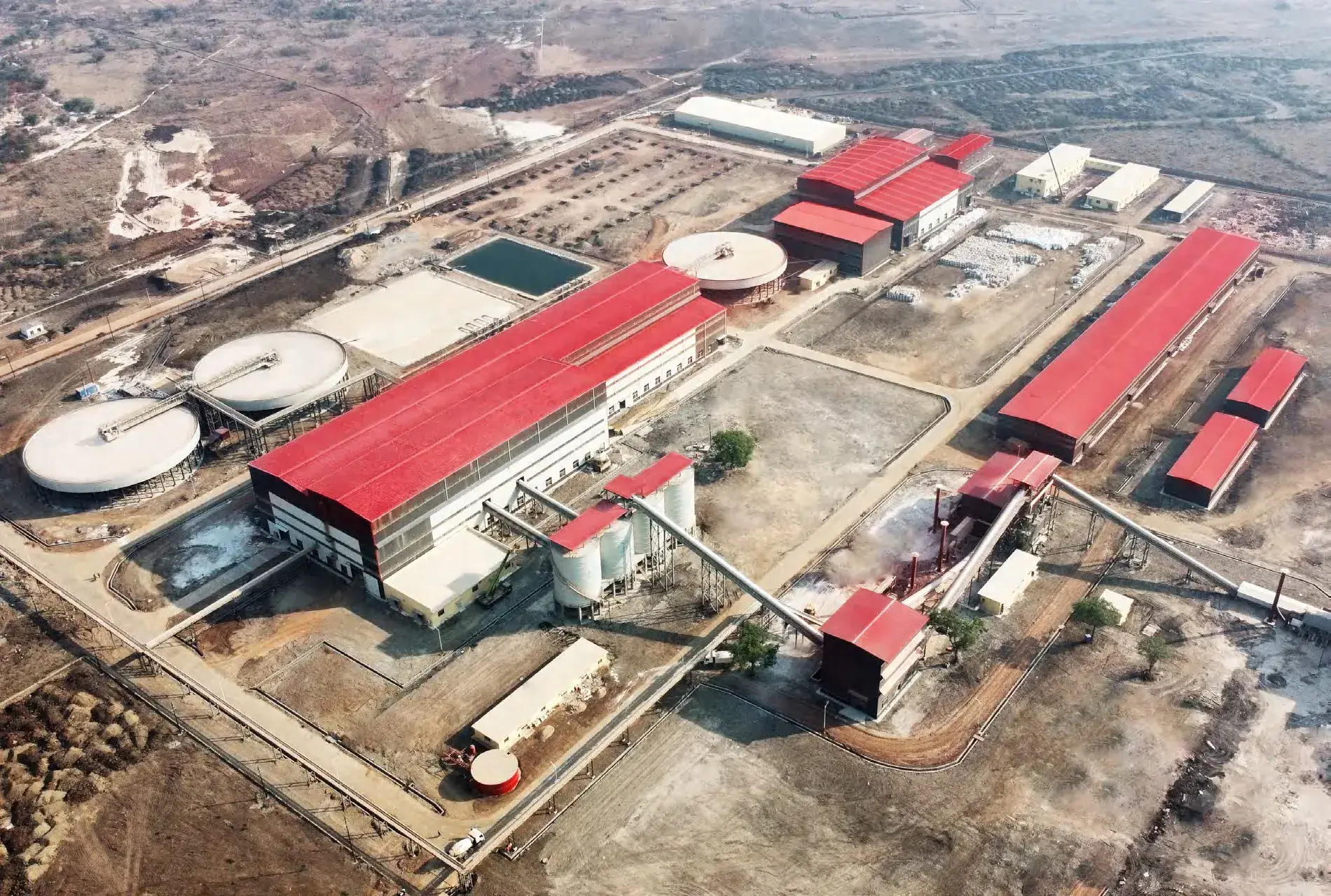
The 4,000 t/d Kyrgyzstan gold CIP reference
Kyrgyzstan gold projects often start with one question: can a carbon-in-pulp cyanidation plant handle 4,000 t/d without overcomplicating the flow sheet? The reference Xinhai delivered in Kyrgyzstan is a 4,000 t/d gold carbon-in-pulp plant. That figure defines the plant's scale. The route uses leaching followed by carbon adsorption, with loaded carbon moved countercurrent to pulp. It's not a small modular installation; it needs enough retention time, carbon inventory, and tankage to keep soluble gold losses low.
Gold mining Kyrgyzstan is not a single ore type. Some deposits suit gravity or flotation, but this reference plant uses the cyanide CIP route because the ore responds to leaching. If you're considering a similar plant, start by confirming leach kinetics and carbon activity before fixing tank sizes.
CIP or CIL: where the decision starts
CIP and CIL are often compared. In CIP, leaching is completed before carbon contact; in CIL, carbon is present during leaching. The difference matters when preg-robbing or slow leaching kinetics are present. For this Kyrgyzstan plant, CIP keeps the leach and adsorption circuits separate, which simplifies sampling and reduces carbon attrition in some ores. Xinhai's published figures say CIL/CIP recovery can reach 99% on suitable ores. Don't read that as a guarantee; it's the upper bound after testwork confirms the ore type.
A larger plant may use CIL solutions where capital cost or footprint pressures favour combined stages. The choice is not universal; it follows ore behaviour, not plant preference.
Leach and adsorption equipment
Equipment selection for a 4,000 t/d CIP plant follows several variables: pulp throughput, gold grade, leach time, carbon concentration, desorption batch size, and cyanide management requirements. The flow sheet typically includes:
- Double-impeller leaching agitation tanks sized for residence time.
- Carbon screens and airlifts to move loaded carbon between stages.
- High-efficiency desorption and electrowinning system for gold recovery.
- Carbon regeneration kiln to restore activity.
- Thickeners, filters, and tailings handling equipment matched to pulp rheology.
Xinhai's manufacturing base supports large equipment. The group lists a ball mill of φ7 m, flotation cells of 320 m³ per unit, leach tanks of 20 m × 20 m, and thickeners of φ100 m. You don't need every one of those for a Kyrgyzstan CIP plant, but the range shows how scale is handled. The same logic appears in CIP plant design and in ball milling for gold, where equipment size follows throughput and grind size.
Solid-liquid separation and cyanide control
Cyanide is toxic; handling is a compliance and safety matter, not a catalogue item. The International Cyanide Management Code is a voluntary industry programme for gold and silver mining operations covering production, transport, storage and use of cyanide. A Kyrgyzstan project should decide early whether the operator wants signatory-level controls or local equivalents. That decision changes tank bunds, ventilation, operator training, and emergency response.
Thickening and filtration follow gravity settling and dewatering variables: solids flux, settling tests, feed density, target underflow density, overflow clarity, flocculant regime, rake torque, and tailings rheology. Filter selection depends on particle size, filterability tests, feed concentration, target cake moisture, throughput, pressure differential, filter cloth or ceramic plate, wash requirements, and cycle time. Cold-weather performance in Central Asia can push you toward enclosed filters or heated feed launders, but that's a site-specific check.
Testing before you commit
You shouldn't lock a 4,000 t/d flow sheet on visual inspection. Xinhai's CNAS-accredited laboratory handles about 5,000 element analyses per month and roughly 200 beneficiation tests a year. The lab can run Bond work index tests, leach tests, CIP simulation, thickening and filtration trials. That data feeds equipment selection and prevents oversizing. A plant treating 1,200 t/d, for example, might share equipment families with the 4,000 t/d reference, but tank volume and carbon inventory differ.
For further reading on how ore type changes recovery, see gold recovery methods or gold leaching.
Delivery and proposal path
Xinhai reports 2,500+ mines served, 600+ mine EPC+M+O projects, operations in 100+ countries, and 700+ technical experts. The company's design institute holds a Class B metallurgical qualification. Its design work can follow JORC, NI 43-101, or VALMIN standards where clients require Australian, Canadian, or international reporting discipline. That does not mean the Chinese qualification is valid elsewhere; it simply means the design team uses those standards as references.
If you're planning gold mining Kyrgyzstan work and want a flowsheet for 4,000 t/d or another throughput, the next step is a representative sample. Contact Xinhai through the contact page or compare the Ghana gold plant reference for a different African scope. The company can also prepare a solution proposal based on the same process logic.