What a gold CIL plant does
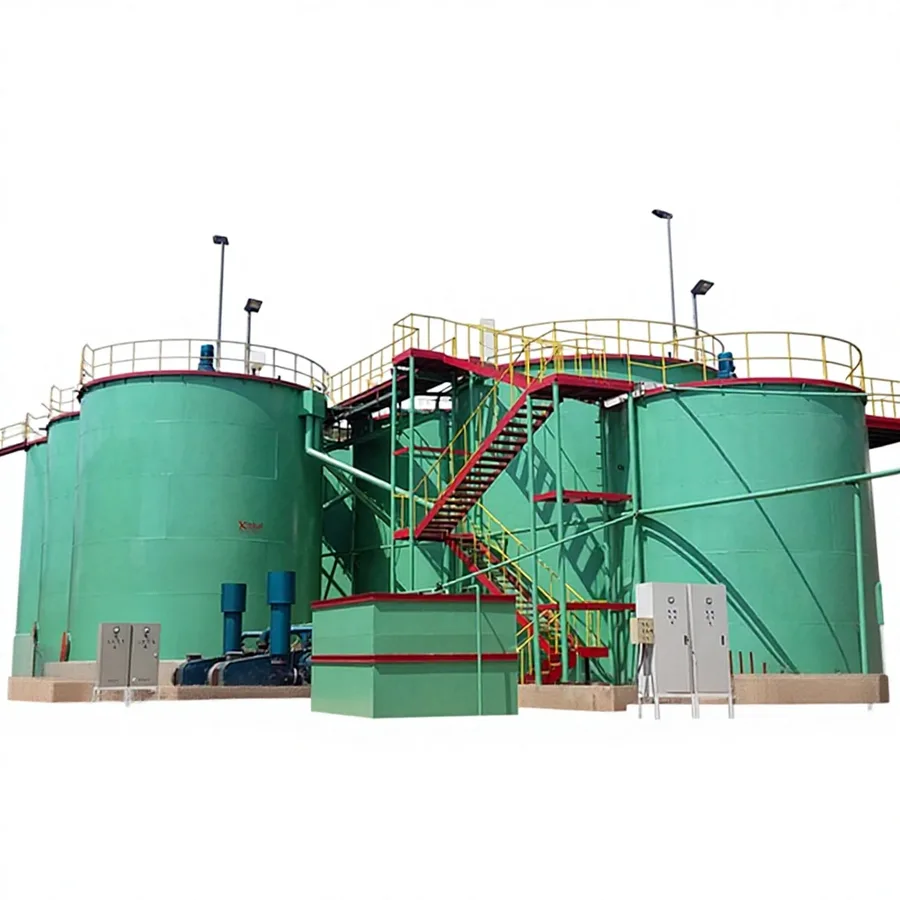
A gold CIL plant is a hydrometallurgical facility where gold is dissolved from finely milled ore by cyanide and simultaneously adsorbed onto activated carbon inside the same agitated tanks. That overlap is what distinguishes carbon-in-leach (CIL) from carbon-in-pulp (CIP). In a CIP circuit, leaching runs to completion before carbon is introduced. Both routes recover dissolved gold onto activated carbon, but the point of carbon contact changes the tank count, carbon inventory and operating strategy. You'll want to read our CIL vs CIP comparison before fixing a flowsheet.
You're choosing between two proven routes. Ore chemistry, preg-robbing potential, grind size and carbon management decide the winner.
How the CIL process runs
A typical gold CIL plant follows a defined sequence. You'll see the same unit operations in most designs, even when tank sizes and reagent doses vary.
- 1. Crushed ore is milled and classified. A common target is P80 of 75 µm, meaning 80% of the solids pass a 75 µm screen.
- 2. The slurry reports to a high-efficiency thickener to lift solids density and recover process water.
- 3. Cyanide and lime are added as the slurry enters the first leach tank.
- 4. Activated carbon advances countercurrent to slurry flow through the CIL tanks. Dual-impeller agitators keep carbon suspended without grinding it down.
- 5. Loaded carbon is separated from the slurry on carbon screens.
- 6. Gold is stripped from the carbon in an elution system, then recovered by electrowinning and smelted to doré.
- 7. Barren carbon is thermally regenerated in a kiln and returned to the circuit.
Xinhai designs CIL/CIP leaching tanks up to 20 m × 20 m. That working volume supports long residence times in high-throughput plants. Gold CIL recovery can reach 99% when the ore and circuit are matched correctly. Never read that as a promise; it's a design target for suitable ores. Before you commit to a CIL route, compare the milling options in our gold milling plant page.
CIL vs CIP: selection variables that matter
CIL refers to a process in which cyanide leaching and carbon adsorption occur in the same tanks. CIP refers to a process in which leaching is completed first in a dedicated set of tanks, and carbon adsorption follows in a separate set of tanks. The choice between them is not cosmetic. It affects slurry residence time, carbon concentration, tank volume, screen loading and reagent consumption.
Engineers weigh these variables when selecting a route:
- Slurry throughput in tonnes per day
- Gold grade and mineralogy
- Leaching time and cyanide consumption
- Carbon concentration and attrition resistance
- Preg-robbing behaviour of the ore
- Safety and environmental requirements for cyanide management
CIL often reduces tank count and capital cost for finely milled ores with rapid gold dissolution, but it places carbon in a difficult chemical environment. CIP gives better carbon handling when leaching produces high free cyanide or when carbon fouling is a concern. See the full comparison in CIL vs CIP: process design and economics.
Core equipment and what drives selection
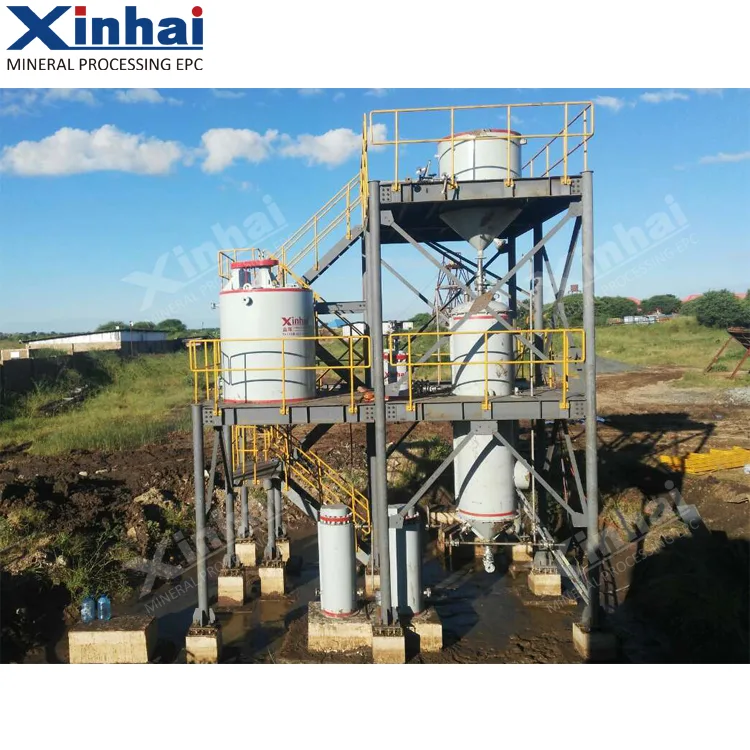
The equipment family for gold extraction covers leaching, carbon adsorption, carbon separation, desorption electrowinning, zinc powder displacement and carbon regeneration. Xinhai's catalog for these duties includes dual-impeller leaching agitation tanks, carbon screens, airlifters, high-efficiency desorption-electrowinning systems, carbon regeneration kilns, multi-layer washing thickeners, deaeration towers and carbon adsorption columns. You'll also find zinc powder feeding and mixing equipment for plants using Merrill-Crowe displacement instead of carbon adsorption.
Mixing equipment selection is driven by tank volume, residence time, slurry concentration, particle size, viscosity, impeller type, power density and corrosion-resistant materials. Some circuits need lift or aeration; others do not. Thickener choice depends on solids flux, settling test results, feed concentration, target underflow density, overflow clarity, flocculant regime, rake torque, tank diameter and tailings rheology.
Filtration equipment appears in tailings, concentrate and sludge duties. Disk, ceramic and belt vacuum filters sit alongside filter presses, vertical filter presses and belt sludge dewatering machines. The same filter model can deliver different throughput and cake moisture on different slurries, so Xinhai's engineers always run filterability tests before specifying. That aligns with gold processing plant design practice.
Sizing, throughput and capacity considerations
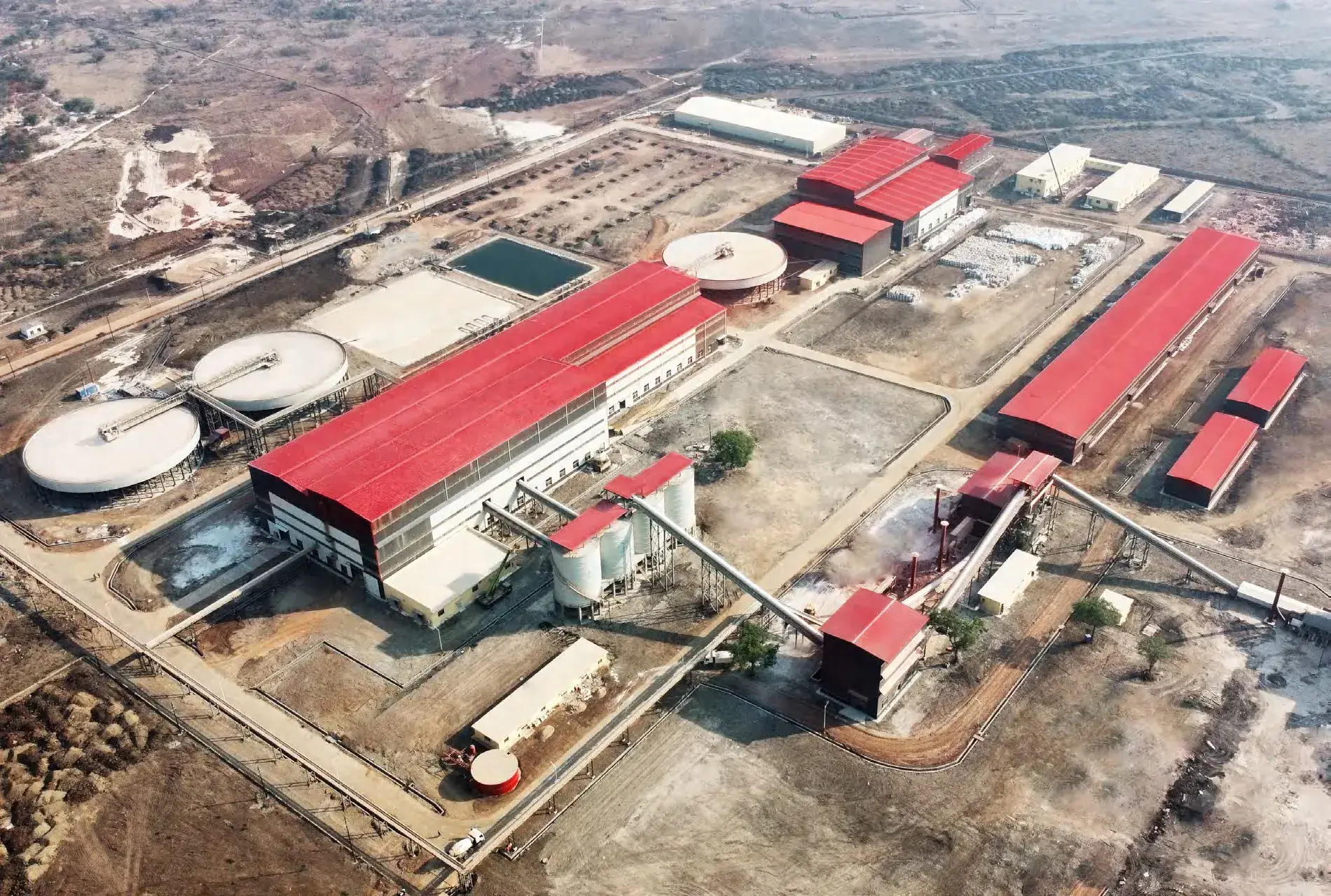
CIL/CIP plant sizing starts with slurry throughput and leach kinetics. Xinhai reports that it has delivered 600+ Mine EPC+M+O projects, served 2,500+ mines and worked in 100+ countries, according to the company's published figures. Those numbers are the company's own, not an independent audit. The group maintains three intelligent manufacturing bases covering about 110,000 m² and produces more than 1,000 equipment types, which supports plants up to 50,000 t/d.
For carbon handling, Xinhai supplies elution systems sized to the circuit's carbon movement rate. That range covers small batch operations through high-tonnage CIL circuits. The design institute holds a Class B metallurgical qualification. Chinese qualifications are not valid in other jurisdictions, but the engineering team can prepare documentation against JORC, NI 43-101 or VALMIN reporting standards when a project requires it.
If you're looking at a specific throughput, the 3,000 t/d gold plant page walks through layout and equipment choices at that scale.
Cyanide handling and safety
Cyanide is toxic. Gold cyanidation demands closed systems, bunded storage, gas detection and strict operating procedures. The International Cyanide Management Code is a voluntary industry programme for gold and silver mining operations covering the production, transport, storage and use of cyanide. Signatory operations are certified through third-party audits. A gold CIL plant design should treat cyanide management as a compliance and safety question, not a catalogue item.
Xinhai's knowledge base carries the same caution: the process involves toxic chemicals and occupational health risk, and equipment selection does not replace compliant design and safety operating procedures.
Reference gold CIL / CIP projects
Xinhai has delivered gold carbon-in-pulp and CIL plants for large-scale operations. The table below lists approved project references from the public ledger.
| Project | Country | Scope |
|---|---|---|
| Kyrgyzstan gold CIP plant | Kyrgyzstan | 4,000 t/d gold carbon-in-pulp plant |
| Guinea gold processing plant | Guinea | 15,000 t/d gold processing EPC |
| Ghana gold mining & processing | Ghana | Contracting and operation |
For more on the Kyrgyzstan installation, see the Kyrgyzstan gold plant page. The Ghana gold plant page covers West African operating conditions.
Testwork and design standards
Before you build a gold CIL plant, run metallurgical testwork. Xinhai operates a CNAS (ISO/IEC 17025) accredited laboratory and an industrial-scale pilot base, performing about 5,000 element analyses per month and roughly 200 metallurgical tests per year. Bond work index tests, settling tests, filterability tests and cyanidation bottle roll tests all feed into equipment sizing. These are self-reported figures from the company.
Design documentation can be prepared to JORC, NI 43-101 or VALMIN guidelines. NI 43-101 work is described as compliant design, not certification. Global production context matters too: the USGS Mineral Commodity Summaries 2025 estimates worldwide gold mine production at 3,300 tons in 2024, up from 3,250 tons in 2023. That growth keeps pressure on process plant designers to deliver efficient CIL and CIP circuits.
Work with Xinhai on your gold CIL plant
Shandong Xinhai Mining Group was founded in 1997 and reports more than 700 technical experts. Its gold recovery methods include gravity, flotation, CIP/CIL cyanidation and heap leaching. The company's three manufacturing bases produce ball mills up to φ7 m, flotation cells at 320 m³ single-tank volume, leaching tanks up to 20 m × 20 m and thickeners up to φ100 m. You can start a discussion through the contact page or learn more about the group's approach on the about page.