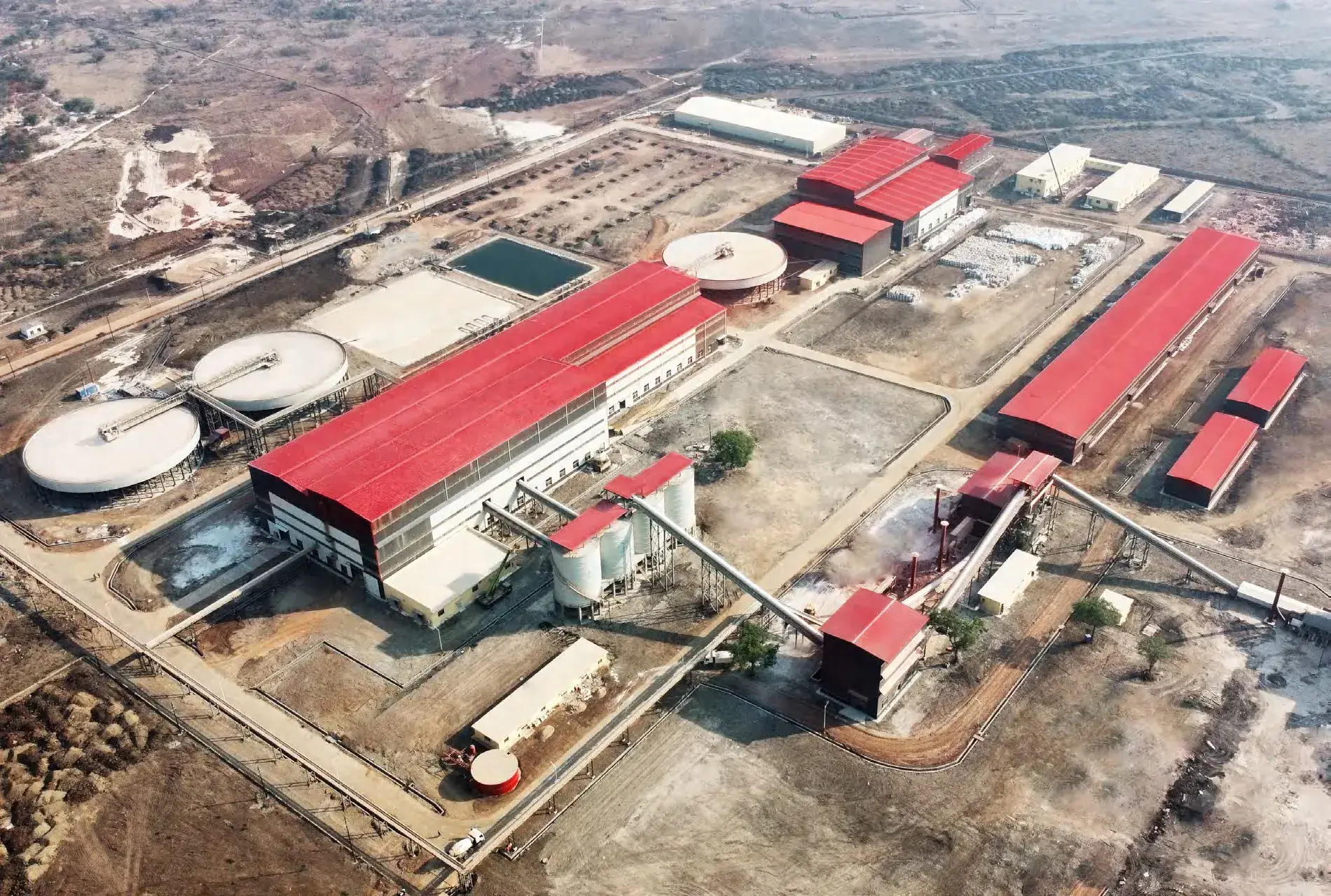
What a 3,000 tpd gold plant actually means
A 3000 tpd gold plant is a processing facility sized to handle 3,000 tonnes of ore per day. That works out to roughly 90,000 tonnes per month on a 30-day operating schedule, or about 1.1 million tonnes per year if you run continuously. For a gold mine owner, this tier sits between mid-size and large-scale operations. You get enough throughput to justify a dedicated ball milling, leaching and tailings circuit, yet the equipment is still transportable and manageable within a single EPC contract. Xinhai has delivered a 15,000 t/d gold processing EPC in Guinea, so a 3,000 t/d design falls within the company's demonstrated range.
Why scale matters in a large gold plant
A large gold plant at 3,000 t/d isn't simply a bigger version of a 500 t/d operation. Mass flow changes everything: grinding media consumption, slurry pumping, thickener area and tailings storage all scale non-linearly. According to the USGS, worldwide gold mine production was an estimated 3,300 tons in 2024. That global context helps frame your throughput decision, but the real engineering work starts with ore characterisation. Bond work index tests, grind size targets such as a P80 of 75 µm, and cyanide leach kinetics determine whether a CIL/CIP circuit can reach 99% recovery on suitable ores. You'll find those variables discussed in our how gold milling works guide.
EPC+M+O delivery for a 3,000 t/d plant
EPC+M+O is an integrated service model that combines engineering, procurement, construction, mine construction management and mine operation management. For a 3,000 t/d project, the sequence runs as follows: 1) E — ore testwork, process design and detailed engineering; 2) P — equipment manufacturing, supplier coordination and packaging; 3) C — civil works, structural steel, equipment installation and commissioning; 4) M+O — construction supervision followed by operational management. This single-contract structure reduces interface risk, because the same team owns the design intent through to steady-state production. Xinhai reports more than 600 EPC+M+O projects across 100+ countries.
Equipment sizing and manufacturing depth
Equipment selection for a 3,000 t/d plant must match the ore's grindability and the chosen recovery route. Xinhai's published manufacturing range supports gold plants up to 50,000 t/d, with equipment such as ball mills up to 7 m in diameter, flotation cells of 320 m³ per tank, leach tanks of 20 m by 20 m, and thickeners up to 100 m in diameter. Those figures come from the company's own specification sheets, not from a third-party audit. For a 3,000 t/d facility, you'll typically specify a single large SAG or ball mill, a bank of six to eight flotation cells if you're using flotation, or a series of six to eight leach tanks for CIL/CIP. The exact configuration depends on testwork results and the target P80. You can compare CIL and CIP layouts on our CIL vs CIP page.
Process route selection for 3,000 t/d ore
At 3,000 t/d, you're likely choosing between gravity recovery, flotation, or cyanide leaching. For free-milling gold ores, a gravity circuit can capture coarse gold early. Refractory or complex ores often need flotation before leaching. For many oxidised ores, CIL/CIP is the default. In a CIL circuit, leaching and carbon adsorption happen simultaneously in the same tanks; in CIP, leaching finishes before carbon contact. CIL/CIP recovery can reach 99% on suitable ores, but that figure is a testwork-derived ceiling, not a promise. Your ore's head grade, sulphide content and preg-robbing behaviour will move the actual number. More detail is in gold CIL plant.
Project references and scale check
Xinhai's representative gold plant references include a 15,000 t/d gold processing EPC in Guinea and a 4,000 t/d gold CIP plant in Kyrgyzstan. Those two projects bracket the 3,000 t/d tier: one is five times larger, the other is 33% larger. The Guinea plant demonstrates that the group has handled larger mass flows, while the Kyrgyzstan CIP plant shows a similar leaching configuration to what you'd likely use at 3,000 t/d. Xinhai reports it has served more than 2,500 mines and completed over 600 EPC+M+O projects. For a smaller comparison, see our 1,000 t/d gold plant page.
Compliance and cyanide management
Cyanide is toxic, and its use in gold processing is governed by site-specific safety procedures and regulatory compliance. The International Cyanide Management Code is a voluntary industry programme covering the production, transport, storage and use of cyanide in gold and silver mining. Signatory operations are certified through third-party audits. If your 3,000 t/d plant includes a leaching circuit, you should plan your cyanide delivery, mixing, containment and detoxification systems early, not as an afterthought. The design institute's Class B metallurgical qualification in China does not automatically transfer to other jurisdictions, so local permitting and engineering sign-off still apply. For a full proposal, use the contact page.