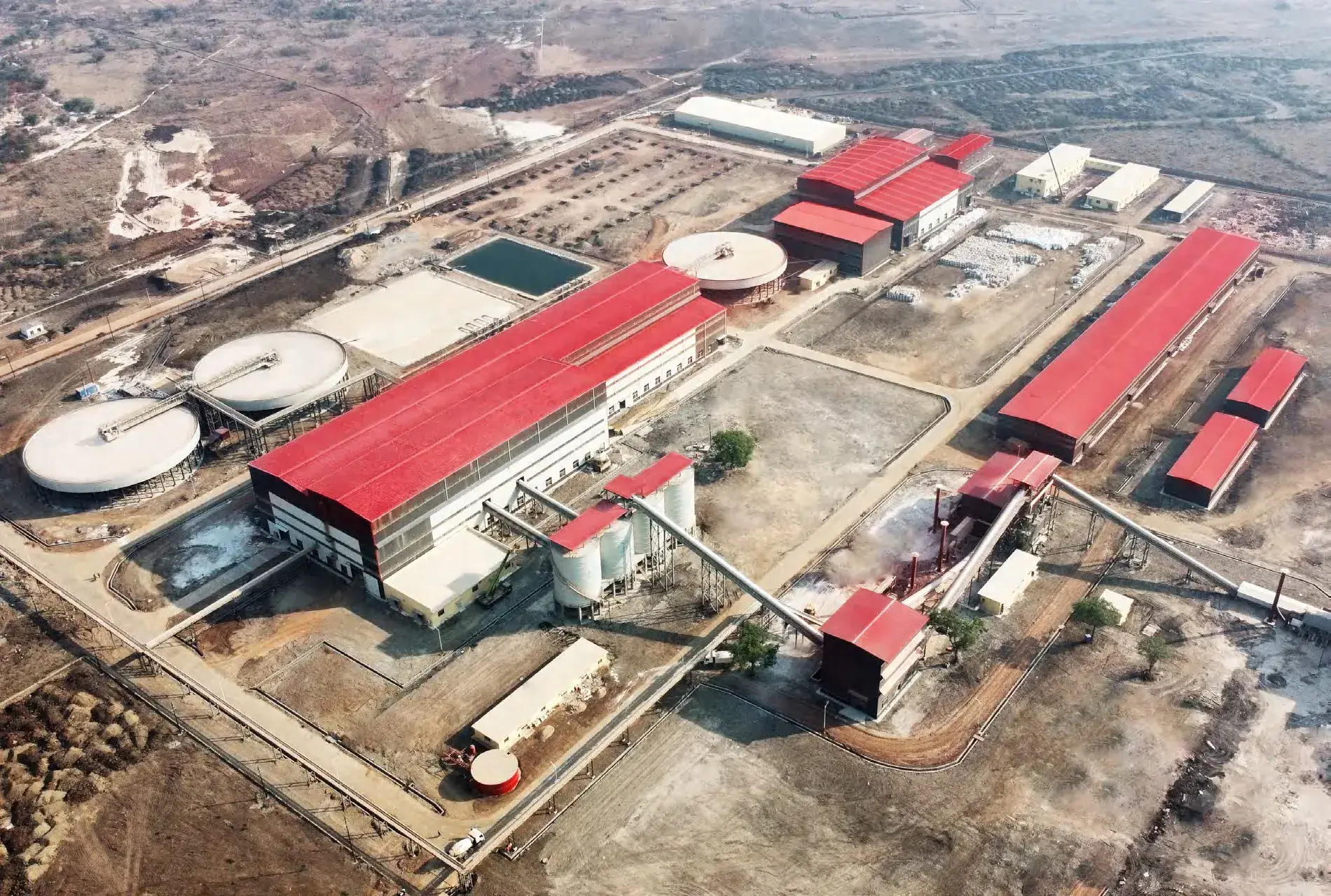
Gold plants by region
This page routes you to representative gold processing and milling projects Xinhai has delivered across Africa and Central Asia. It is deliberately a navigational hub, not a sales pitch. The three projects below are approved references only: a 15,000 t/d gold processing EPC in Guinea, a contracting and operation project in Ghana, and a 4,000 t/d carbon-in-pulp plant in Kyrgyzstan.
Xinhai reports 2,500+ mines served, 600+ Mine EPC+M+O projects and 100+ countries, according to the company's published figures. Gold processing is one of the more route-dependent fields in mining: the same head grade can support different economics depending on grind size, reagent access, power cost and local water balance. That is why regional pages exist: they show where a design was applied rather than which design you should copy.
Need a proposal? Use the contact page to submit ore details.
West Africa: Guinea and Ghana
Guinea represents the larger end of Xinhai's regional scope. The approved reference is a 15,000 t/d gold processing EPC project. EPC stands for engineering, procurement and construction. In Xinhai's wider model, it extends to EPC+M+O, where mine construction management and mine operation management follow the physical build. That matters because a 15,000 t/d plant can't be treated as a scaled-up 500 t/d design; it needs a defined process flow, long-lead equipment lists and construction sequencing that fit a single-site constraint.
Ghana is different again. The approved reference is gold mining and processing contracting and operation, not a one-off build. That model suits owners who want to keep the asset but transfer day-to-day operational risk. You can see the project page at Ghana gold project. If you are comparing carbon routes, the CIL versus CIP explanation is a useful companion.
West African ores often carry free-milling gold with a high gravity-recoverable fraction. That is a process selection issue rather than a regional one. But it appears often enough in the region to shape testwork priorities.
Central Asia: Kyrgyzstan
The Kyrgyzstan reference is a 4,000 t/d gold carbon-in-pulp plant. Carbon-in-pulp is a hydrometallurgical route where dissolved gold is adsorbed onto activated carbon directly in the pulp, before the barren slurry is separated. It differs from carbon-in-leach mainly in the number and arrangement of adsorption stages; read the CIL vs CIP guide if that distinction is new to you. The 4,000 t/d figure refers to nominal fresh feed throughput.
Central Asian projects often force different infrastructure assumptions than West African ones: reagent supply chains, winter construction windows and tailings storage conditions can dominate the schedule. The project page at Kyrgyzstan gold CIP shows the reference.
If you are working through a CIP design, the gold CIP plant design notes outline the key equipment and layout choices.
What each destination decides
A regional page does not tell you which flowsheet to use. It tells you what questions the flowsheet must answer. The practical sequence Xinhai uses runs like this:
- Step 1 — ore characterisation and metallurgical testwork, including grindability and leach response;
- Step 2 — feasibility design and process flow diagrams;
- Step 3 — detailed engineering, equipment selection and CAPEX estimation;
- Step 4 — procurement, construction and commissioning;
- Step 5 — operation, debottlenecking and process control.
Each step is documented in the broader knowledge base. For gold, the starting point is almost always a milling and leaching decision; you can work through that at gold ore milling and gold leaching. If you are still at the testwork stage, how to test gold ore is the cleaner entry point.
Global context from the USGS: worldwide gold mine production in 2024 was an estimated 3,300 tons. That number is a market-size reference rather than a project promise. It just confirms the scale at which gold plant decisions get made.
How Xinhai supports regional projects
Xinhai's design institute holds a Class B metallurgical qualification under the Chinese system. That means it can carry out metallurgical engineering design within the scope of that qualification; it is not presented as the same as a Class A mining construction qualification, which sits with the group's construction entity. The group can also prepare design work to JORC and NI 43-101 compliant standards where required.
On the construction side, Xinhai's associated contractor holds a Class A qualification for general contracting of mine construction projects. That supports the C in EPC. The design and build functions are integrated, which is why a full-lifecycle mine design approach runs through the regional pages: pre-feasibility, feasibility, FEED, detailed design and operations.
FEED, or front-end engineering design, is the stage between feasibility and detailed design where process flow diagrams, plot plans and CAPEX estimates are produced. In mining, FEED covers the mine, the plant and the tailings facility together. A deviation at FEED can amplify into budget overruns later, so the regional references treat FEED as a decision point rather than a paperwork step. Read more at how to build a gold processing plant or jump to the gold CIL plant solution.
Gold recovery options across the regions include gravity concentration, flotation, cyanide leaching and carbon adsorption. Cyanide handling is governed by safety and compliance procedure, not by a catalogue choice; any leach design must respect that.