What a 1000 tpd gold plant is
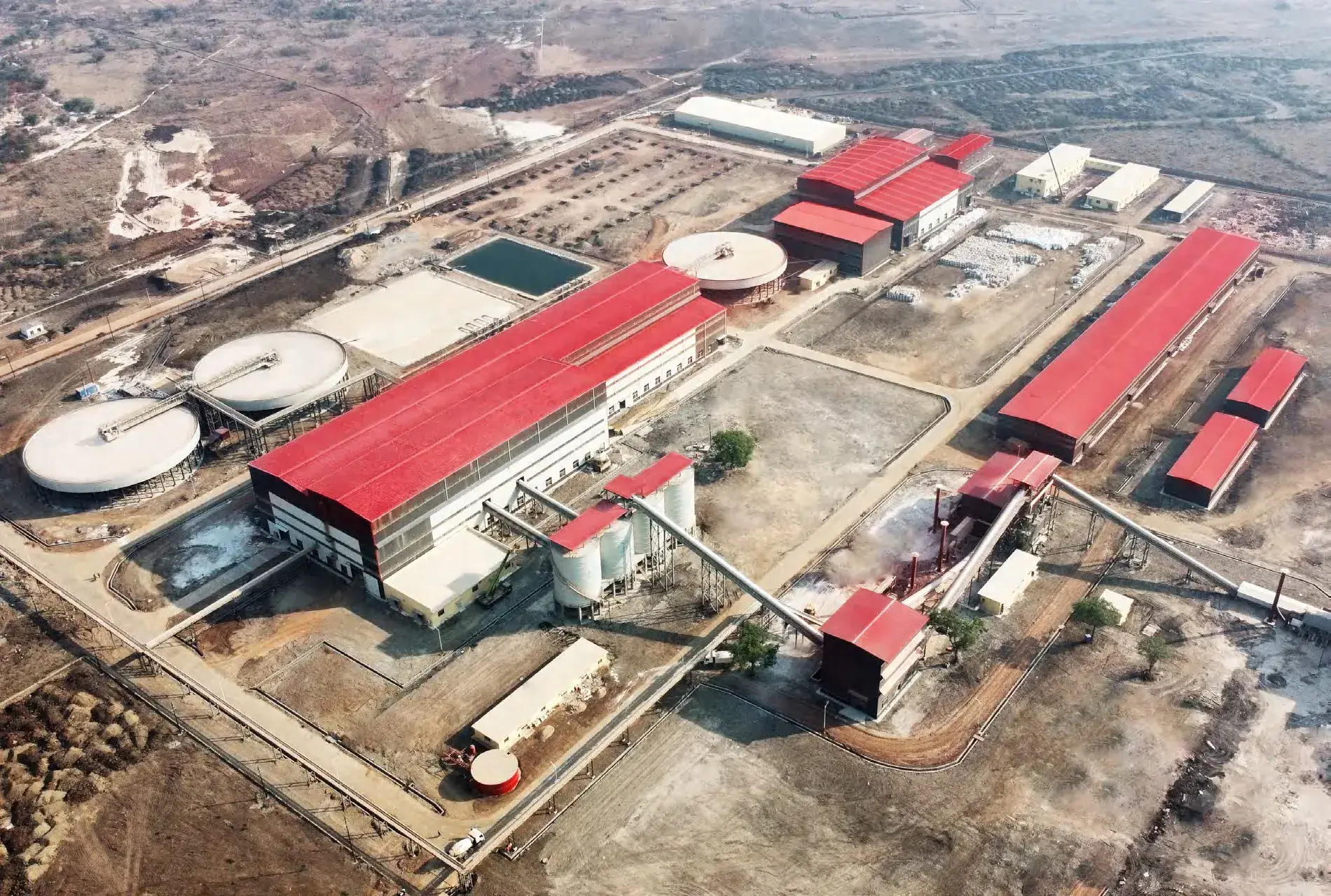
A 1000 tpd gold plant is a processing facility sized to treat roughly 1,000 tonnes of run-of-mine ore per day, placing it in the mid-tier gold plant class. That throughput sits between small modular installations and large multi-line concentrators. According to the USGS Mineral Commodity Summaries 2025, worldwide gold mine production reached an estimated 3,300 tons in 2024. A plant at this scale is a serious project, not a pilot, and it demands a complete milling and recovery circuit designed around ore testwork.
Xinhai reports that the company has delivered more than 600 mine EPC+M+O projects and serves 2,500+ mines across 100+ countries. For a 1000 tpd gold plant, the engineering logic is the same as for larger operations: crush, grind, classify, recover and dewater, but each stage has to be sized to keep capital and operating costs proportionate to a mid-tier throughput.
Grinding and classification at 1,000 t/d
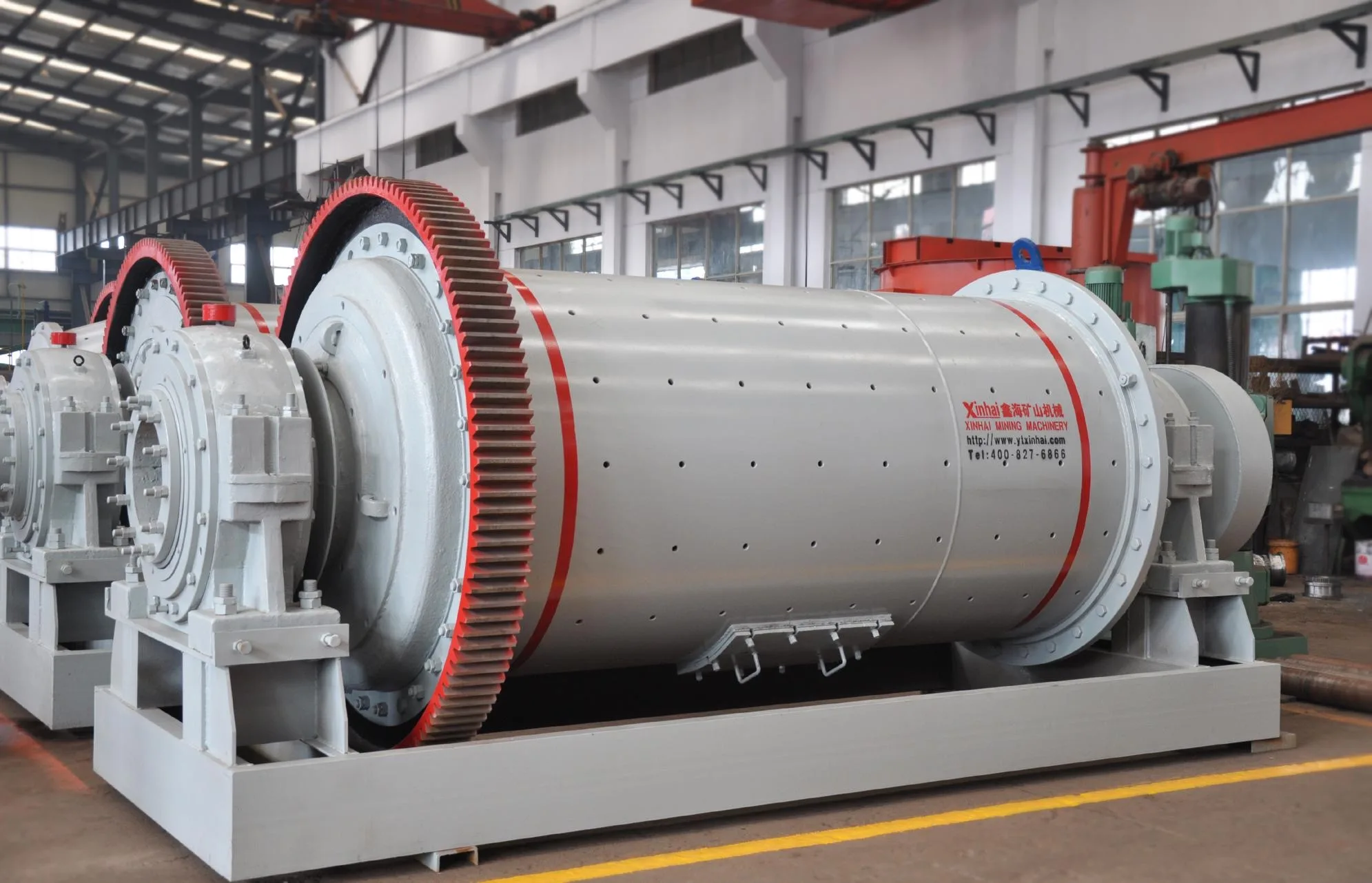
Grinding equipment liberates gold-bearing minerals after crushing so that flotation, leaching or gravity circuits can access them. At 1,000 t/d, a wet ball mill up to 7 m in diameter is often the core grinding unit. Xinhai's equipment range includes wet grate discharge, wet overflow and dry ball mills, and the choice depends on whether the flowsheet uses one-stage or two-stage milling.
Selection is not just about mill diameter. The main variables include Bond work index or pilot grinding energy, feed size, product particle size, slurry density, throughput, number of grinding stages, liner and media configuration, and whether the mill runs in closed circuit with classification. A P80 of 75 µm means 80% of the ground product passes a 75 µm screen; hitting that target consistently is what makes downstream recovery work.
Classification equipment, usually hydrocyclones or spiral classifiers, returns oversize to the mill and sends fine product forward. Hydrocyclone selection turns on cut size, feed pressure and concentration, slurry density, throughput, classification efficiency, overflow fineness and underflow density.
Recovery circuit options for a mid-tier gold plant
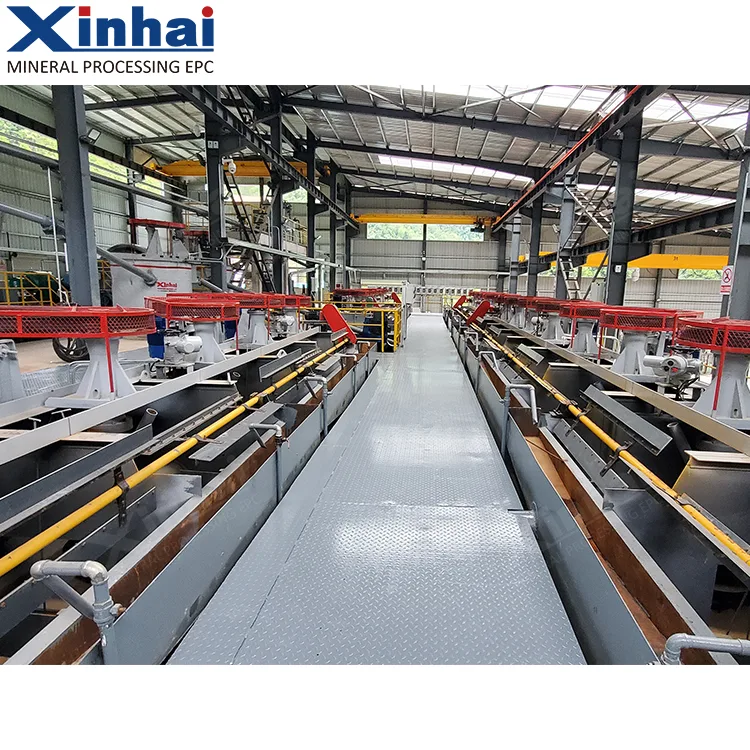
A 1000 tpd gold plant can use gravity, flotation, CIL/CIP cyanide leaching or a combination. For sulphide ores, the standard route is grinding followed by flotation; Xinhai's single-cell flotation machines go up to 320 m³. For free-milling or oxidised ores, carbon-in-leach or carbon-in-pulp is common. Xinhai states that CIL/CIP recovery can reach 99% on suitable ores, but that is a laboratory and flowsheet-dependent ceiling, not a guarantee for every orebody.
Leach tanks up to 20 m × 20 m provide the residence time needed at this throughput. Cyanide handling is a serious compliance issue. The International Cyanide Management Code is a voluntary programme covering the production, transport, storage and use of cyanide, and signatory operations are certified through third-party audits. If you are comparing CIL versus CIP, the deciding factors are usually ore grade, preg-robbing carbon content, tank configuration and operating cost.
Key equipment sizes at a 1000 tpd gold plant
| Area | Typical equipment | Capacity reference |
|---|---|---|
| Grinding | Wet ball mill | Up to 7 m diameter |
| Flotation | Mechanical flotation cells | Single cells up to 320 m³ |
| Leaching | CIL/CIP tanks | Tanks up to 20 m × 20 m |
| Thickening | High-rate thickener | Up to 100 m diameter |
These figures come from Xinhai's equipment range, not from a guaranteed flowsheet. The actual installed size for your ore is set by testwork and mass balance, not by a catalogue maximum.
Delivery model and design controls
Xinhai's published figures list 700+ technical experts, three smart manufacturing bases covering roughly 110,000 m² and more than 1,000 equipment types. The company's design institute holds a Class B metallurgical qualification in China and it works to JORC, NI 43-101 and VALMIN design standards where required. A CNAS-accredited laboratory and industrial pilot base perform around 5,000 element analyses a month and about 200 metallurgical tests a year, including Bond work index tests.
That matters because a 1000 tpd gold plant should not be bought as a catalogue package. You start with testwork, then flowsheet development, then equipment selection. Xinhai delivers the gold processing plant as a single-partner EPC+M+O contract, which means the same team handles design, procurement, construction and operation. For a smaller starting point, you might compare the 500 t/d gold plant; for a larger step, the 3,000 t/d gold plant uses the same logic with more parallel lines.