Gold Milling: One Team from Testwork to Production
Gold milling is the comminution stage that turns run-of-mine ore into a ground product fine enough for gold recovery. Shandong Xinhai Mining Group engineers gold processing plants from small-scale operations up to 15,000 t/d. You get one accountable partner for flowsheet design, equipment supply, construction, commissioning and operation. Xinhai reports that it has served 2,500+ mines and delivered 600+ mine EPC+M+O projects across 100+ countries and regions. The company also says it has worked with 70+ ore types. In 2024, worldwide gold mine production was an estimated 3,300 tons, according to the USGS.
Your ore determines the route. The route determines the plant.
Whether you're evaluating a gold milling plant or a complete gold processing plant, the starting point stays the same: test the ore before you size the equipment.
Gold Recovery Routes: CIL/CIP, Flotation and Gravity
Gold recovery circuit selection depends on ore mineralogy, liberation size, gold particle size and clay content. For free-milling ores, gravity concentration can recover coarse gold early. For sulphide ores, flotation concentrates gold into a smaller mass for further treatment. For ores suited to cyanidation, carbon-based circuits dominate.
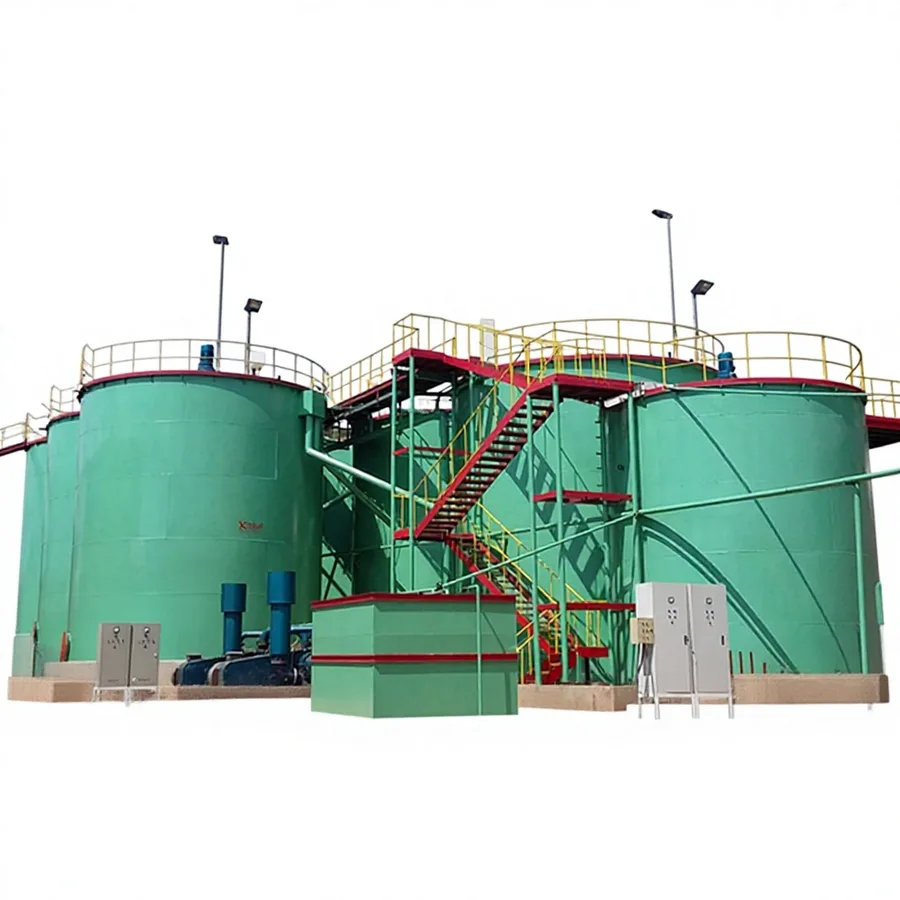
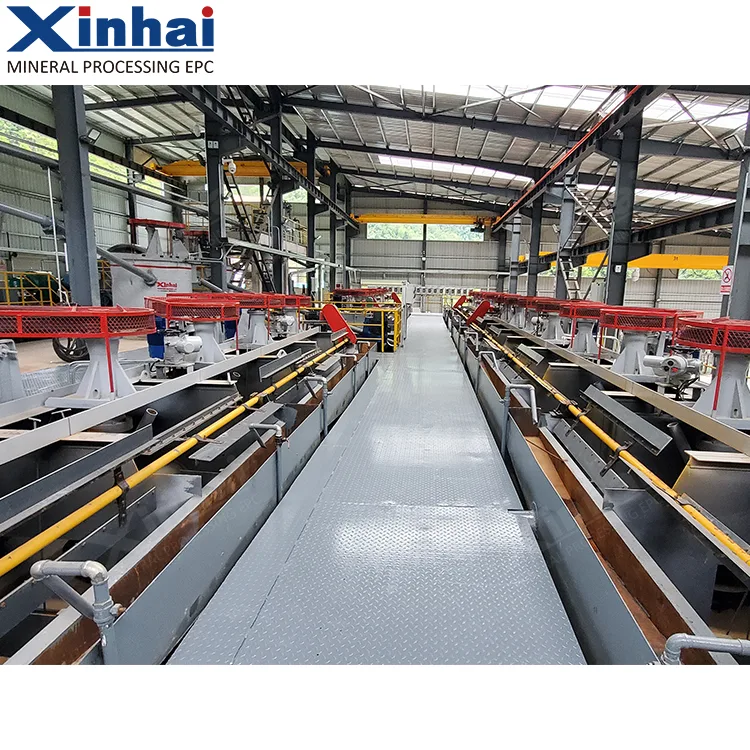
Carbon-in-pulp (CIP) is a recovery route in which dissolved gold is adsorbed onto activated carbon in a series of agitated tanks after leaching. Carbon-in-leach (CIL) combines leaching and adsorption in the same vessel train. Xinhai states that CIL/CIP recovery can reach 99% on suitable ores. Its leaching tanks go up to 20 m × 20 m, and flotation cells up to 320 m³ per unit. See gold CIL plant or compare CIL versus CIP.
Cyanide is toxic. Its transport, storage and use are governed by site safety procedures and, where applicable, the International Cyanide Management Code. A plant design must include containment, emergency response and detoxification before tailings discharge.
Testwork and Design Before Equipment Selection
Xinhai's CNAS-accredited laboratory performs element analysis, Bond work index testing, flotation tests and leaching tests. The company reports around 5,000 element analyses per month and roughly 200 metallurgical tests per year. A Bond work index value is not a fixed ore property; it is a measured input for sizing grinding mills. If you skip this step, you're guessing at power draw and media consumption.
Process design follows a staged path. Prefeasibility work develops a concept. A bankable feasibility study locks the mineral resource assumptions. Front-end engineering design (FEED) turns the concept into process flow diagrams, plot plans, preliminary P&IDs, long-lead equipment lists and a CAPEX estimate. Detailed engineering then produces structural, electrical and instrumentation drawings.
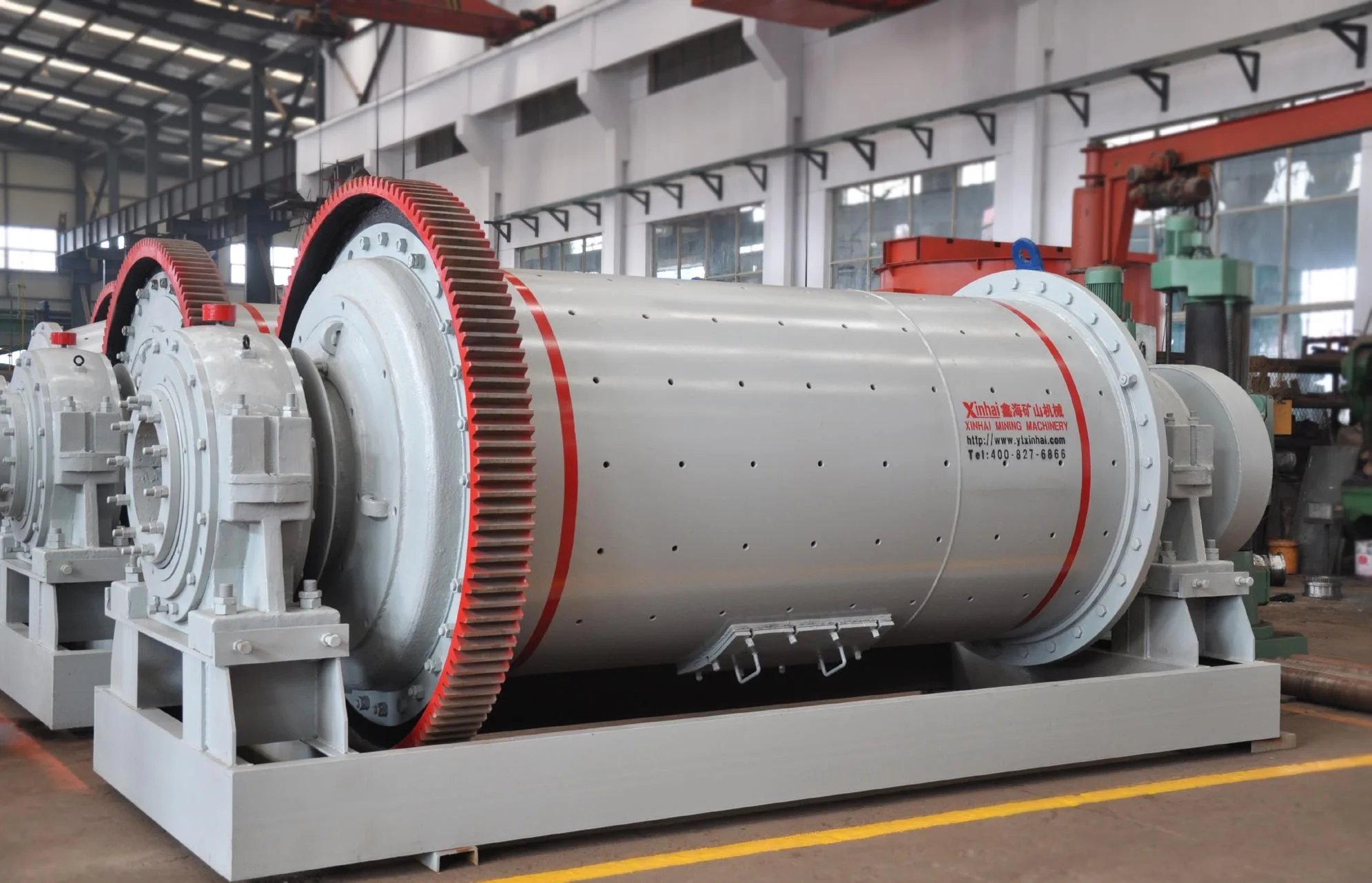
Xinhai's design institute holds a Class B metallurgical qualification in China. Its designers work to JORC, NI 43-101 and VALMIN reporting requirements when a project demands those standards. Large grinding circuits use ball mills up to 7 m in diameter.
Here's the sequence Xinhai follows for a gold milling plant:
- Ore characterisation: element analysis, mineralogy, Bond work index
- Flowsheet development: gravity, flotation, CIL/CIP or a combination
- FEED and detailed design: PFDs, P&IDs, equipment sizing, plot plan
- Manufacturing and procurement: mills, cyclones, pumps, tanks, cells
- Construction, commissioning and operation
You can start with ore testwork or review how gold milling works before you commit.
EPC+M+O: One Contract, Fewer Failure Points
EPC+M+O is Xinhai's full-chain service model. It combines engineering, procurement, construction, mine construction management and mine operation management. The point of the model is to remove the gaps between designers, equipment suppliers and site teams. Ordinary project delivery often fragments those responsibilities. Xinhai's model keeps them under one commercial and technical owner.
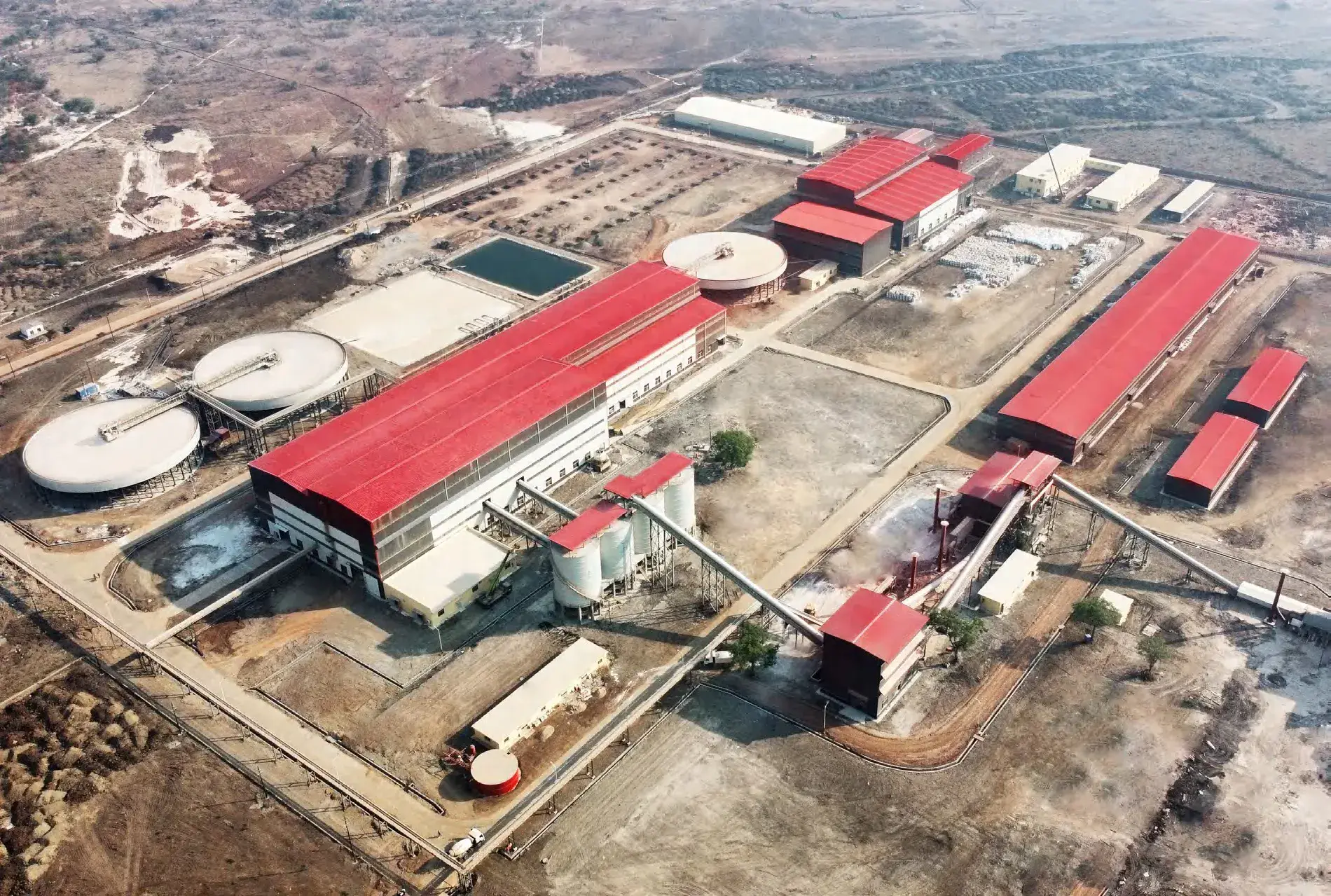
The construction arm holds a Class-A qualification for general contracting of mine construction projects in China. Xinhai operates three manufacturing bases totalling about 110,000 m² and supplies more than 1,000 equipment types. Its reference capacity stretches to 50,000 t/d, though most gold projects sit far below that.
Representative projects from the company's published materials include a 15,000 t/d gold processing EPC in Guinea, a 4,000 t/d gold carbon-in-pulp plant in Kyrgyzstan, and gold mining and processing contract work in Ghana. Those projects illustrate how the model scales. You can read more about Ghana gold plants or the Kyrgyzstan CIP plant.
Xinhai's full-lifecycle design approach says integrated mine-to-plant design locks in more than 70% of life-of-mine costs. That is not a savings claim. It is a control point: once the route and equipment sizing are fixed, later changes are expensive.
Gold Plants Sized by Daily Throughput
Gold processing plants do not scale linearly. A 100 t/d plant and a 3,000 t/d plant share a logic but not a layout. Xinhai standardises around capacity tiers so you can evaluate a realistic starting point without paying for a blank-sheet design.
- Small-scale gold plant: modular and compact routes for small deposits, pilot production or pre-feasibility demonstration
- 500 t/d gold processing plant: a proven mid-size tier for project development and first-phase production
- 1,000 t/d gold plant and 3,000 t/d gold plant: full-scale throughputs with the same single-partner delivery model
If you're still narrowing the envelope, use the capacity selection page to compare options by feed rate, footprint and equipment class. The right tonnage is the one your orebody and mining schedule can sustain, not a number picked from a brochure.
Request a plant proposal at the contact page only after you have a rough throughput range and a few representative ore samples. That makes the first engineering answer useful, not generic.